What Is CranioSacral Therapy?
CranioSacral Therapy (CST) is a gentle, hands-on method that works on the craniosacral system — the membranes and cerebrospinal fluid surrounding the brain and spinal cord. Using a touch no greater than 5 grams, roughly the weight of a nickel, practitioners detect and release restrictions in this system that interfere with central nervous system function.
Dr. John E. Upledger, an osteopathic physician, developed CST following scientific research conducted from 1975 to 1983 at Michigan State University, where he served as a clinical researcher and Professor of Biomechanics. His findings identified a rhythmic motion in the craniosacral system that practitioners can palpate and use to assess and address restrictions throughout the body.
Because the craniosacral system directly influences the central nervous system, releasing its restrictions improves how the CNS functions, along with other body systems — digestive, musculoskeletal, respiratory, and circulatory. CST is also used as a preventive health measure, helping the body build resistance to disease and recover from a wide range of health challenges.
What to Expect in a Session
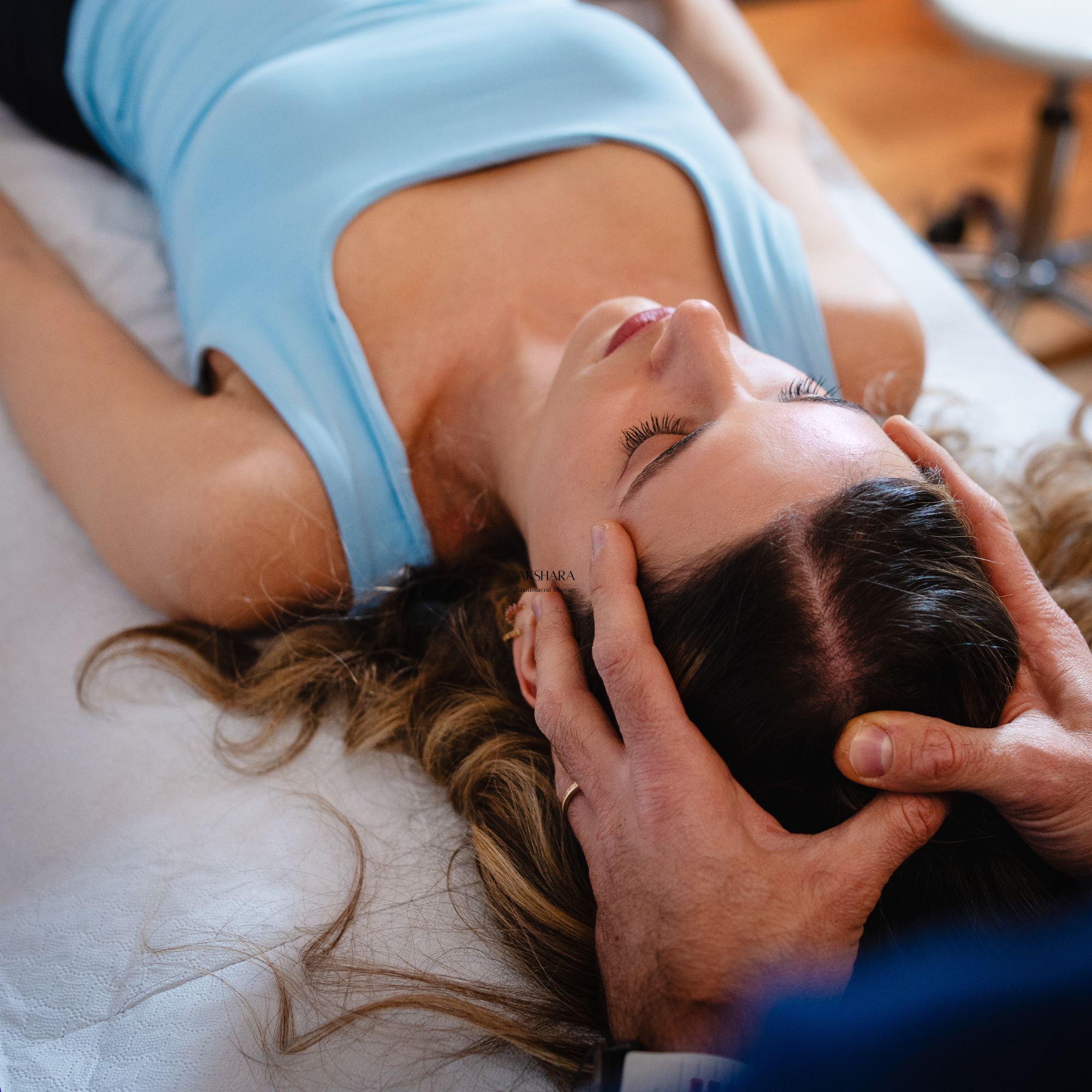
You stay fully clothed throughout a CST session. You lie on a massage table while the practitioner places their hands lightly on your skull, spine, sacrum, or other areas of the body. They palpate a subtle fluid rhythm and use that information to identify where restrictions exist.
A typical session runs 45 to 60 minutes. Most people feel warmth, gentle pulsing, or a sense of deep relaxation. Some fall asleep. Others notice a feeling of release or shifting in areas where they carry tension or pain. The 5-gram touch is one of the gentlest manual therapy approaches available, making it well-suited for people of all ages, including newborns and the elderly.
CST can be used alone or alongside other manual therapies and conventional medical care. Many practitioners are trained in both CST and massage, and some sessions integrate elements of both. For more on how the two differ, see CranioSacral Therapy vs. Massage Therapy.
Conditions Addressed by CranioSacral Therapy
CST has been used to address a broad range of health challenges. Practitioners work with people experiencing:
- Alzheimer's and CranioSacral Therapy
- Autism, Sensory Processing & CranioSacral Therapy
- Central Nervous System Disorders and CranioSacral Therapy
- Chronic Fatigue and CranioSacral Therapy
- Chronic Pain and CranioSacral Therapy
- Traumatic Brain Injuries and Concussions
- Emotional Difficulties, Depression and CranioSacral Therapy
- Fibromyalgia and other Connective-Tissue Disorders and CranioSacral Therapy
- Immune Disorders and CranioSacral Therapy
- Learning Differences, ADD, ADHD and CranioSacral Therapy
- Migraines, Headaches and CranioSacral Therapy
- Motor-Coordination Impairments and CranioSacral Therapy
- Orthopedic Problems and CranioSacral Therapy
- Pediatric Challenges and CranioSacral Therapy
- Post-Surgical Dysfunction and CranioSacral Therapy
- Conception, Pregnancy, Birth
- PTSD and CranioSacral Therapy
- Scoliosis and CranioSacral Therapy
- Sleep Challenges and CranioSacral Therapy
- Spinal Cord Injuries and CranioSacral Therapy
- Stress and Tension-Related Problems and CranioSacral Therapy
- TMJ, Dental Challenges and CranioSacral Therapy
- CranioSacral Therapy for Cancer Support